
A customer reaches the counter, taps a card or phone, and the payment is complete within seconds. That speed is a big reason contactless payments have become a standard part of checkout at restaurants, retail stores, and other high-traffic small businesses.
But contactless payment solutions cover more than tap to pay with a card. Customers can use contactless cards, mobile wallets, or even a QR code, depending on the setup. Many of these contactless payment methods rely on NFC technology to securely exchange payment information at close range.
And if your current card reader is already contactless-enabled, you may be able to accept contactless payments without replacing your entire checkout setup. Let’s see how.
Key Takeaways About Contactless Payments
- Most tap-based contactless transactions use near field communication (NFC).
- Customers can tap supported cards, phones, and wearable devices to pay.
- Contactless transactions can process in seconds and help keep checkout lines moving.
- Encryption, tokenization, and dynamic transaction data provide enhanced security.
- Businesses generally need NFC-enabled payment terminals, but existing hardware may already have NFC capability.
What Are Contactless Payments?
Contactless payments let customers pay without inserting or swiping a card. Instead, they hold a contactless payment card or compatible smart device near a reader. Most tap-based contactless payment systems use near field communication to exchange data over a very short distance. It is a short-range wireless technology designed for close, intentional interactions.
How NFC Contactless Payments Work
With NFC technology, the customer’s card or mobile device communicates with the terminal when the two are close together. NFC Forum’s latest specification supports contactless connections at ranges up to two centimeters, helping devices connect quickly without requiring perfect alignment. That close operating range is one reason near field communication NFC works well for intentional tap-based transactions.
You can usually spot compatible contactless technology by the wave-shaped contactless symbol on a card or terminal. NFC developed from the broader family of radio frequency identification technologies, although NFC and RFID technology are not interchangeable. NFC is designed for deliberate, close-range communication.
For the customer, the process is simple: tap, wait for a green light or confirmation, and go. That can make checkout faster than waiting for a chip transaction or completing traditional swipe transactions.
What Types of Contactless Payment Options Can Businesses Accept?
Businesses can offer several contactless payment options. Which ones matter most will depend on your hardware, customer base, and payment systems.
Contactless Credit and Debit Cards
Contactless cards contain technology that lets customers tap rather than insert or swipe. These contactless payment cards include credit cards and contactless debit cards and work much like other debit cards from the customer’s perspective.
Requirements can vary by purchase amount and card issuer, and rules differ by market. Some small eligible purchases may not require a PIN, while others may trigger cardholder verification.
Mobile Wallets
A digital wallet stores payment credentials on a phone or other device so customers can pay without pulling out a physical wallet. Popular wallet services include:
- Apple Pay
- Google Pay
- Google Wallet
- Samsung Pay
- Samsung Wallet
On Apple devices, services like Apple Pay may ask the user to confirm the purchase with Face ID, Touch ID, or a passcode before completing mobile wallet transactions. Other wallets may use similar biometric or device authentication.
Wearable Payments
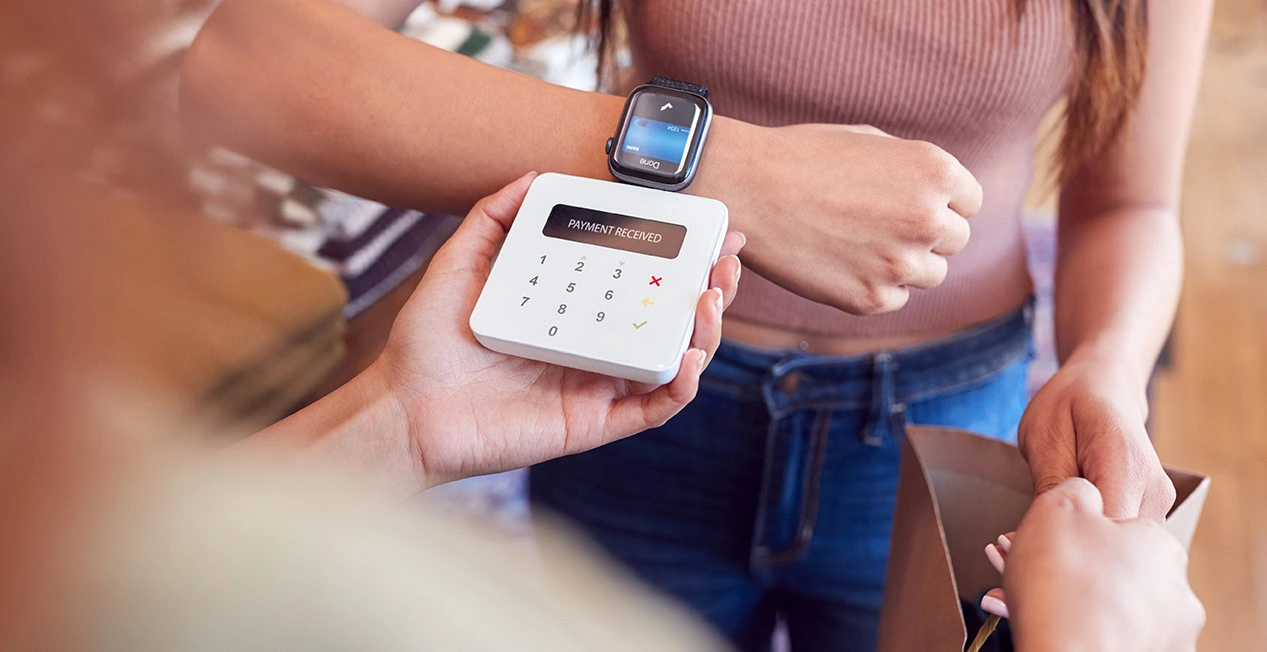
A smartwatch, fitness tracker, or other wearable device can also hold digital payment credentials. This is an added benefit for customers who may have a watch with them but not their phone or wallet, such as someone heading into a fitness class.
QR Code Payments
Some businesses use a QR code as another contactless payment method. A customer scans it with a payment app, reviews the transaction, and approves the payment from their phone. Some QR payment flows can be linked to a PayPal account or other digital account. While peer-to-peer apps can also send money, merchant QR systems are designed to collect payments directly for purchases.
Why Are More Customers Choosing Contactless Payments?
Speed is one of the biggest advantages. Customers can tap and move on without inserting a chip or handing over a card, and contactless payment technology can complete the exchange in seconds. The difference matters most when a business processes many transactions throughout the day.
It is especially useful for:
- Retail stores and grocery stores
- Restaurants and cafés
- Salons and beauty businesses
- Gyms and fitness studios
At a restaurant, a faster tap can keep the counter moving during a lunch rush. In retail, it can reduce friction when a checkout line starts building. Salons can finish checkout without making clients dig through a bag for a wallet, while gym members may already have a phone or wearable within reach.
Demand is also no longer niche. J.D. Power reported in its 2026 U.S. Merchant Services Satisfaction Study that 92% of U.S. merchants now accept digital wallets, up four percentage points from 2024. Federal Reserve research also found that mobile phones were used for 11% of all in-person non-bill payments in 2024, while Juniper Research projects global contactless payment transaction value to grow from $10.16 trillion in 2026 to $19.49 trillion by 2031.
For small merchants and micro businesses, those numbers point to a broader shift in customer expectations. Offering multiple ways to pay is increasingly part of good payment acceptance, especially in-store. Allowing customers to use the method they already prefer can make checkout feel easier without changing the rest of the buying experience.
There is also a practical staffing benefit. A familiar tap process requires less back-and-forth at the terminal and gives employees fewer steps to explain when a customer wants to use a phone or watch instead of a card.
Are Contactless Payments Secure?
Contactless payments are designed to protect sensitive information as it moves between the card or device and the payment network. Modern contactless systems use encrypted data and dynamic transaction information rather than relying only on the static data associated with a magnetic stripe.
For example, Visa states that each of its in-person contactless transactions generates a one-time, transaction-specific code. That makes stolen transaction data much harder to reuse and helps reduce counterfeit fraud and other fraudulent transactions.
Tokenization adds another layer. Instead of exposing the underlying card number, a token can stand in for the sensitive account information. CardConnect also supports P2PE and tokenization as part of its payment security capabilities.
Mobile wallets can add device-level authentication as well. Depending on the wallet, the user may confirm the transaction with biometrics or a passcode. Tokenized credentials may also be updated when replacement cards are issued, depending on the wallet and participating financial institutions. The exact process can vary by the card issuer and other financial institutions involved.
Do You Need New Equipment to Accept Contactless Payments?
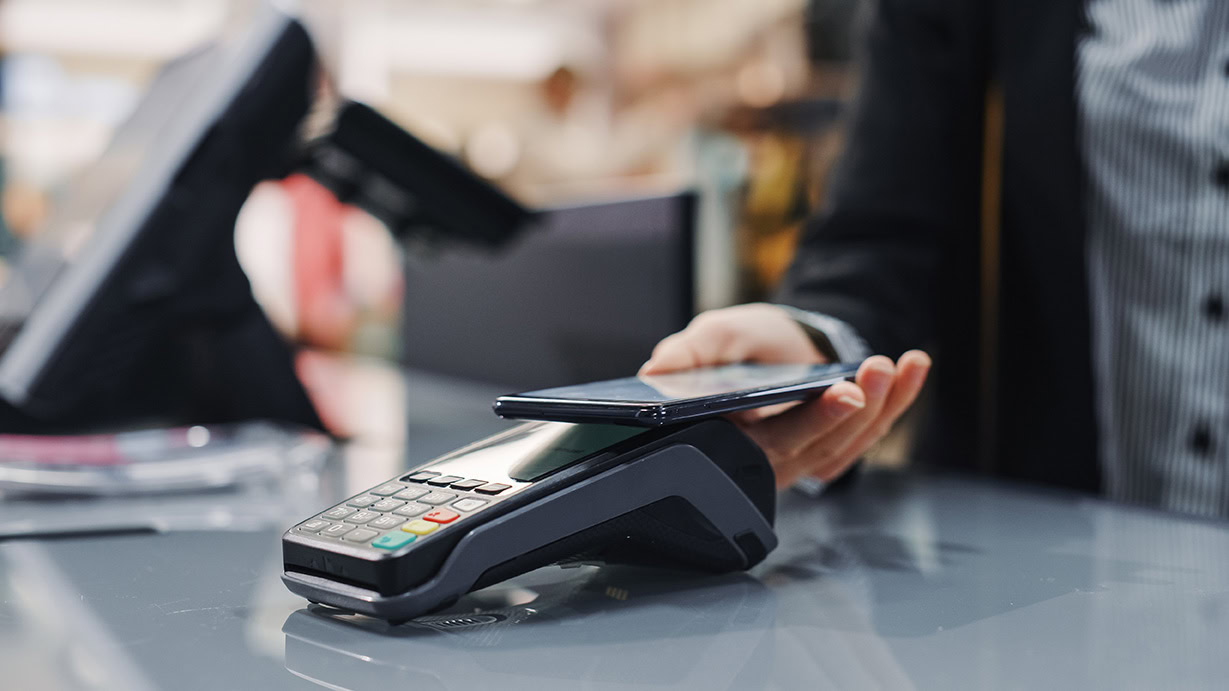
Usually, you need a reader or compatible POS terminals with NFC support to accept contactless payments. But that does not automatically mean replacing your entire POS system.
Start by checking your current terminal for the contactless symbol or reviewing its NFC specifications. If the hardware already has the necessary capability, enabling contactless digital payments may be a software or payment processor setup issue rather than a hardware purchase.
If you do need different equipment, CardConnect offers contactless-ready Clover and CardPointe options, including portable hardware for businesses that need to take payments away from a fixed counter. We also offer free equipment options, which can help reduce the cost barrier to updating your setup.
See If Your Hardware Already Supports Tap-to-Pay
How to Start Accepting Contactless Payments
If you want to adopt contactless payments, start with the system you already have rather than assuming you need to rebuild your checkout process. This looks like:
- Check whether your current terminal supports NFC.
- Confirm which contactless methods your processor supports.
- Enable or update the terminal if required.
- Test supported cards and digital wallets before rollout.
- Show customers where to tap at checkout.
The goal is simple: give customers more ways to pay while keeping the process easy for your staff. A provider that handles both in-person and online payments can also help you manage more of your payment solutions through one relationship.
What Should You Look for in a Contactless Payment Provider?
When comparing providers, look beyond whether they can technically process a tap. Your provider affects the cost, reliability, and day-to-day experience of your payment systems.
Important factors include:
- Processing rates
- Contactless-ready hardware
- Security and tokenization
- In-person and online payments
- Responsive support
- Flexible equipment options
CardConnect combines contactless-ready hardware with customized processing rates, 24/7 support, and a dedicated account manager. Our lowest-rate guarantee also gives businesses a concrete way to compare costs: we’ll provide the lowest rate or pay you $250.
Make Contactless Payments Easier for Your Business and Your Customers
Customers increasingly expect to pay with the card, phone, or device already in their hand. You do not need to make that convenience complicated or assume it requires an expensive equipment overhaul.
CardConnect can help small businesses choose payment solutions that support modern payment acceptance while comparing what you are paying now. With contactless-ready hardware and a $250 lowest-rate guarantee, you can modernize checkout without losing sight of the cost of every transaction.
Get your customized payment processing quote today to see how CardConnect can help your business start accepting contactless payments.


